Two Years Into West Portal's Street Redesign, the Numbers Finally Came In
September 17, 2026
September 17, 2026
"West Portal is one of the most travelled and cherished neighborhoods in San Francisco," Supervisor Myrna Melgar said when the city first proposed reworking the station entrance back in 2024. "Its station should exemplify the name: a portal to the westside." That was the pitch. This July, two years and a fatal crash later, the SFMTA finally published the numbers that tell you whether it worked.
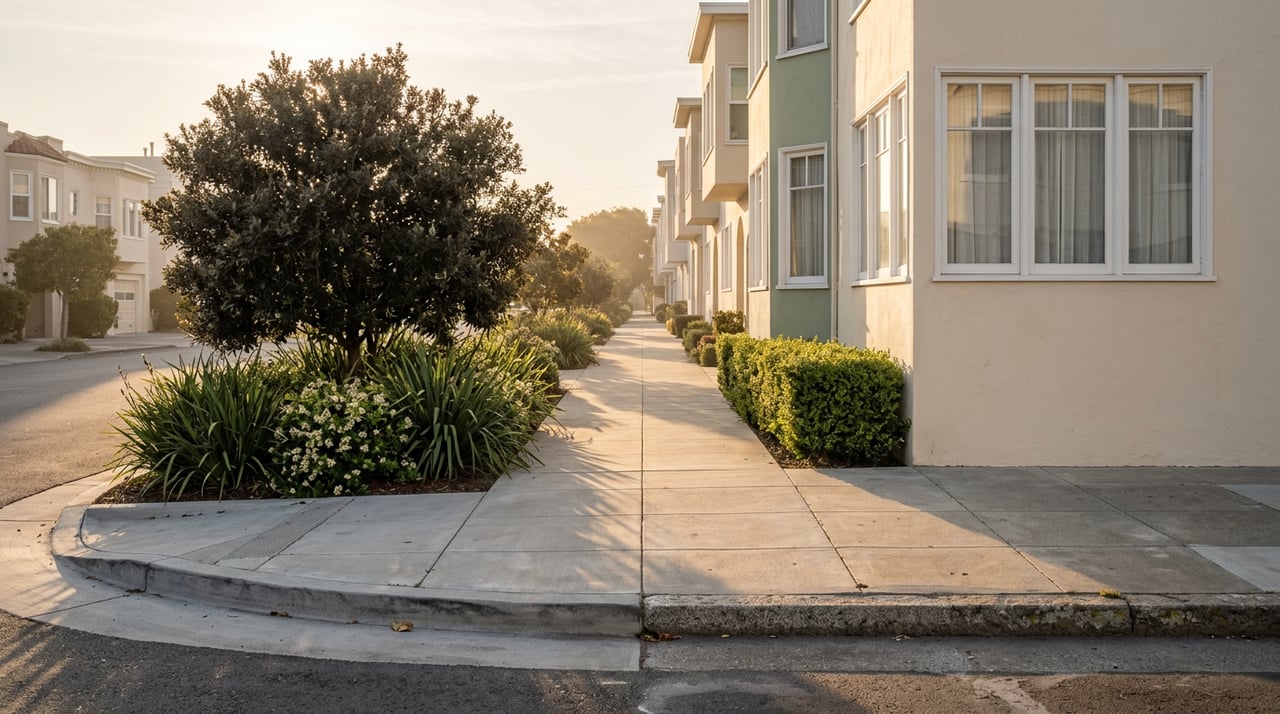
If you live in West Portal, you already know something changed at the horseshoe outside the Muni station. What you may not know is how completely the data backs up what your eyes have been telling you, and where it still contradicts what you hear from your neighbors.
The physical changes rolled out in stages between late 2024 and September 2025, which is why they can feel like they happened all at once if you weren't tracking each phase:
None of this touched the Twin Peaks Tunnel itself or the trains. It was entirely about the surface, the fifty feet of pavement where pedestrians, cyclists, buses, and cars all compete for the same six seconds of green light.
Here is what the SFMTA's own before-and-after count found, released this July in the agency's evaluation report. The red transit lane cut illegal U-turns at the station by 75 percent. At West Portal Avenue and Ulloa Street, 97 percent of drivers now make legal movements through the intersection. At West Portal Avenue and Vicente Street, 99 percent follow the new left-turn restriction. And the planters that were installed specifically to stop people from cutting across the rail tracks outside designated crossings reduced that behavior by 75 percent as well.
Those are the kind of numbers that would normally read as a public agency grading its own homework generously. Except an independent local newsroom checked.
In July, Mission Local pulled its own comparison using the same half-square-mile radius around the crash site, a block from the Muni station. Traffic collisions in that area dropped 60 percent between October 2024 and March 2026 compared to the same calendar window two years earlier, October 2022 to March 2024. Collisions serious enough to cause injury fell from an average of 6.7 per year to 2.7 per year. And, in the detail that tends to get skipped in most street-safety writeups, sales tax revenue in the corridor went up over the same period. Slower cars and safer crossings did not cost West Portal's merchants foot traffic. If anything, the opposite happened.
That combination, fewer crashes and more spending, is the part worth sitting with if you run a business on the avenue or if you have ever avoided walking through the horseshoe to the library because the intersection felt like a coin flip.
Here is the part the spreadsheet cannot fully explain. Drive or bike through Ulloa and West Portal on any given evening and you can still find someone blowing through the No Left Turn sign, because 97 percent compliance still leaves a noticeable 3 percent, and in a corridor this busy that residual few are easy to catch on camera. Neighbors who film those violations, and post them, are not wrong about what they're seeing. They are seeing the exception. The frustrating thing about a 97 percent compliance rate is that the failures are the only part anyone bothers to record, so the video evidence and the survey data can both be true at once and still point residents toward opposite conclusions about whether the project worked.
That gap between a near-total statistic and a visible minority of holdouts is probably why some of the loudest local commentary since July has pushed for something more drastic: closing the Ulloa and West Portal intersection to private cars entirely rather than trusting drivers to keep improving. The SFMTA's position, at least for now, is more measured. The materials used in the horseshoe redesign, the murals and decorative crosswalks, are built to last three to five years by design, which the agency describes as a deliberate evaluation window rather than a placeholder. It is applying for grant funding to make the current layout permanent rather than treating what is there now as temporary.
If your daily walk to the station used to involve stepping around the horseshoe rather than through it, or timing your street crossing to avoid a driver rolling an illegal U-turn, the numbers say that specific friction is genuinely rarer now than it was two years ago. If you commute by car through Vicente or Claremont, the near-universal compliance with the new turn restrictions means those intersections move more predictably, even if the occasional violation still catches your eye. And if you have watched West Portal Avenue's restaurant and retail scene fill back in over the past two years, the sales tax data suggests the calmer streets have been a quiet contributor to that, not a drag on it.
The honest caveat is that nine months and one evaluation report is still a short track record for a change designed to be judged over three to five years. The SFMTA itself frames this as a first checkpoint, not a final verdict, which is a more careful stance than either the agency's own press release or the commenters demanding a full car ban would suggest on their own.
If you want to see the redesigned horseshoe for yourself rather than take anyone's word for it, September gives you two good excuses.
The Greater West Portal Neighborhood Association is hosting its biannual West Portal Wine Walk on Thursday, September 17, an evening stroll through the avenue's shops and restaurants with wine tastings along the way, organized by the West Portal Merchants Association. Then, from September 26 through October 4, the neighborhood joins the citywide SF Good Neighbor Week, a run of community events built around the simple idea of actually meeting the people on your block, with a kickoff parade planned at Civic Center Plaza. Nominations for the neighborhood's own Good Neighbor Awards closed at the end of August, which tells you the GWPNA has been planning this for a while.
Both events route you directly past the horseshoe and the new crosswalks, which makes September as good a month as any to form your own opinion about whether two years of construction delivered what the city promised, or whether the 3 percent still running the red light are the more accurate preview of what a village-scale commercial strip looks like once it starts absorbing this much foot and vehicle traffic at once.
If you are weighing a move to West Portal, or already live here and are curious what a home in this corridor is actually worth given how the street in front of it has changed, Mandy Lee can walk you through it block by block. Reach out for a free home valuation and a conversation grounded in what is actually happening on the ground here, not just what the listing photos show.
Stay up to date on the latest real estate trends.
Innovative real estate maven hailing from the heart of San Francisco. Born and raised in this iconic city, I use my deep local roots with modern strategies, reshaping the real estate landscape. With an intimate knowledge of the city's diverse neighborhoods and a knack for design, she's your guide to finding the perfect property match.