Leave a Message

Thank you for your message. We will be in touch with you shortly.

ADUs In The Richmond: Basics And Benefits

December 18, 2025

Thinking about building an ADU on your Richmond District property? You are not alone. Many San Francisco homeowners want flexible space for family, a private office, or rental income without moving. In this guide, you will learn the basics, what is feasible in the Richmond, how permitting works in San Francisco, realistic timelines and costs, and how an ADU can affect resale. Let’s dive in.

ADU basics in the Richmond

An accessory dwelling unit is a secondary, independent home on the same lot as your primary residence. ADUs can be attached, detached, or created by converting existing space such as a garage or basement. Junior ADUs are smaller interior units that typically share systems with the main house.

Why this matters in the Richmond: many lots are already built out, yet garage conversions or modest backyard cottages are often possible. ADUs can add flexible space for multigenerational living or help offset carrying costs through rent. For current rules and checklists, start with the San Francisco Planning Department’s ADU resources.

Common ADU types

Interior conversions

Converting a basement, attic, or unused interior space can be one of the most cost-effective paths because the exterior footprint usually does not change. In the Richmond, where many homes have usable basements, this option can be efficient if ceiling height, light, and egress can meet code.

Garage conversions

Many Richmond homes include front or rear garages. Turning a garage into a self-contained unit is common where new utility runs are manageable. Confirm structural capacity and plan for separate access, sound control, and code requirements.

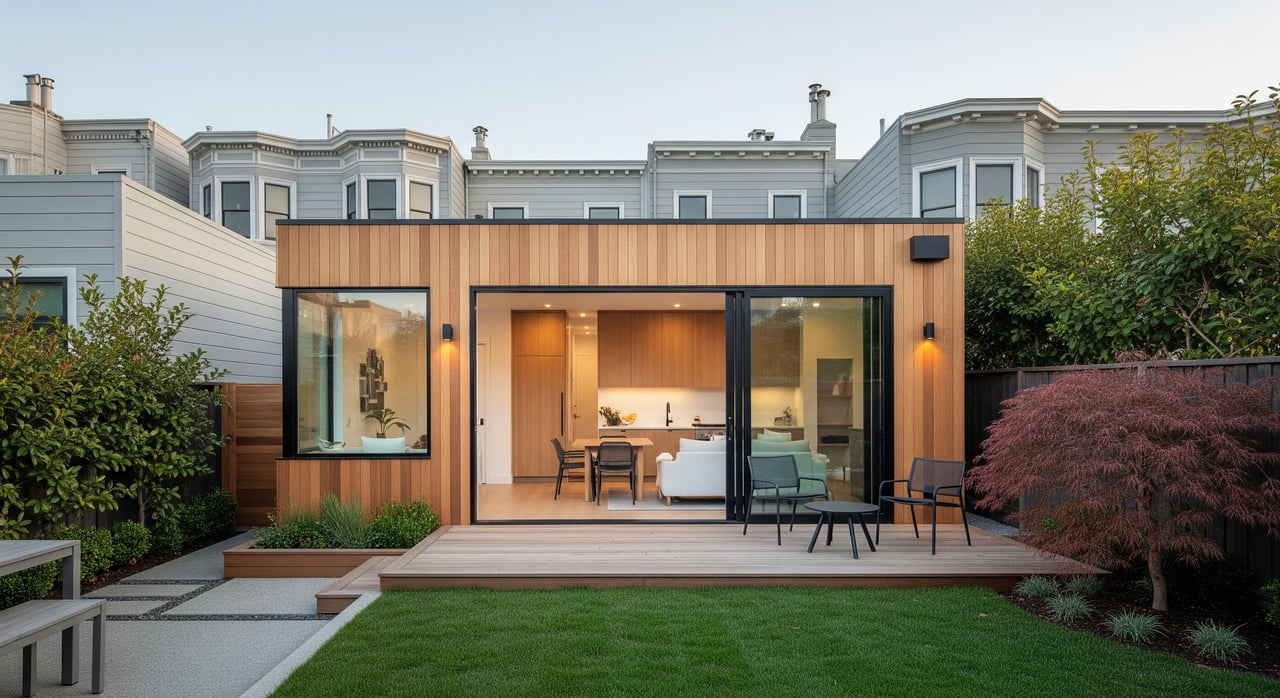
Detached backyard ADUs

A small new structure in the rear yard offers privacy and design flexibility. On some Richmond lots, rear-yard depth or setbacks can limit size and placement, so confirm buildable area early with SF Planning.

Junior ADUs (JADUs)

JADUs are typically 500 square feet or less and are created within the existing home. They can share utilities and sometimes an entrance, which can reduce cost, though space is limited.

Site constraints to check first

Before you commit, review site specifics that can determine feasibility:

  • Lot size and configuration. Rear-yard depth and side setbacks affect detached ADUs.
  • Existing building coverage. Some standards limit additions, so verify with Planning.
  • Setbacks and easements. Utility easements or rear setbacks can limit placement.
  • Parking and right-of-way. State law has eased many parking rules for ADUs, but site conditions still matter. Confirm requirements with Planning and the Department of Building Inspection.
  • Historic or landmark status. Design review may apply in designated areas.
  • Access and topography. Narrow lots, slope, or tight access can add cost or time.
  • Utilities and sewer. Conversions can be simpler if they avoid major new connections.

A quick way to ground your research is to pull parcel details and prior permits through the City’s portals, starting at the SF.gov property information pages, then confirm zoning and ADU questions with SF Planning.

Permits and process in San Francisco

Most ADUs in California are encouraged by state law, which promotes “ministerial” review when projects meet objective standards. San Francisco implements these rules with local procedures and checklists. Plan on coordinating with both SF Planning and the Department of Building Inspection (DBI).

Typical steps include:

  • Early research and an optional pre-application with Planning or DBI.
  • Design and permit drawings prepared by qualified professionals.
  • Building permit application to DBI, with Planning clearance and trade permits as needed.
  • Additional reviews if your property has historic considerations or the project falls outside objective standards.

For statewide context and summaries of ADU laws, see the California Department of Housing and Community Development.

Typical timeline

Actual timing varies, but many owners experience:

  • Preliminary feasibility: 1 to 4 weeks.
  • Design and permit documents: 4 to 12 or more weeks, depending on complexity.
  • Plan review and permits: often a few months for straightforward, objective projects. More complex or discretionary cases can take longer.
  • Construction: several weeks for simple interior conversions, several months for detached new builds.

Because timelines evolve, check current expectations and submittal checklists with SF Planning and DBI.

Budget factors

Your total budget typically includes:

  • Design and permits. Architectural and engineering plans, Planning and DBI fees, and any applicable impact fees.
  • Construction. Interior and garage conversions are usually lower cost. Detached ADUs often cost more due to foundations, utilities, and site work. Labor and materials in San Francisco trend higher than many markets.
  • Soft costs. Utility connection fees, possible sewer lateral upgrades, potential fire sprinkler or code upgrades, insurance, and property tax impacts.
  • Financing. Owners commonly use cash, home equity loans or lines, renovation or construction loans, and specialized ADU financing. Lender policies vary.

Value, income, and lifestyle impacts

Resale and marketability

A legally permitted, well-designed ADU typically increases functional living area and can improve marketability for buyers who want rental income or multigenerational options. The uplift depends on unit size, quality, and buyer demand. Appraisers and lenders will look for permits and code compliance, so legality is key.

Rental income and operations

ADUs can be used for long-term rentals or for family. Short-term rentals in San Francisco have separate regulations and stricter rules, so confirm current requirements before planning on short stays. Consider property management, maintenance, vacancy, taxes, insurance, and local landlord-tenant laws when evaluating returns.

Lifestyle flexibility

  • Multigenerational living with privacy for relatives or caregivers.
  • A quiet office or studio separate from the main home.
  • A long-term wealth strategy that can help offset monthly costs while adding flexibility to your property.

Risks to plan for

  • Cost overruns or construction disruptions.
  • Design limits on some lots or in character-rich areas of the Richmond.
  • Rental market or regulatory changes that affect income projections.
  • Financing or insurance conditions specific to homes with rental units.

For data-driven context on how ADU reforms have increased production statewide, see the Terner Center’s ADU research.

How to get started in the Richmond

  • Review the latest ADU guidance and ministerial checklists at the San Francisco Planning Department.
  • Explore building permit processes and submittal steps with the Department of Building Inspection.
  • Pull your parcel’s zoning and property details through SF.gov property tools.
  • Check state-level summaries at California HCD for broader ADU rules.
  • Consider an informational meeting with Planning or DBI, then get preliminary feasibility input and ballpark costs from a local architect or contractor experienced with San Francisco ADUs.

Ready to explore how an ADU could fit your Richmond property or your next purchase strategy? Reach out to Mandy Lee for neighborhood-aligned guidance, design-conscious presentation, and a clear plan to position your home and its potential. Request a free home valuation to see how an existing or planned ADU could influence your options.

FAQs

Is my Richmond District property eligible for an ADU?

  • Eligibility depends on zoning, lot configuration, existing use, and any historic designation, so start with SF Planning’s ADU guidance and confirm site specifics.

What is the fastest, most affordable ADU path in SF?

  • Interior or garage conversions are often quickest and less expensive because they limit exterior changes and major utility work, though site conditions and code requirements still apply.

Will I need to replace parking if I convert my garage?

  • State law reduced many parking requirements for ADUs, but site-specific rules and local policies still matter, so confirm with SF Planning and DBI.

How long does it take to permit and build an ADU in San Francisco?

  • Many straightforward projects aim for permit review in a few months, with construction ranging from several weeks to several months depending on complexity and site conditions.

How can an ADU affect resale value in the Richmond?

  • A properly permitted, well-designed ADU can increase marketability and appeal to more buyers, with the actual value impact depending on quality, size, and local demand.

Can I use my ADU for short-term rentals in San Francisco?

  • Short-term rentals have separate local regulations and stricter rules, so verify current requirements before planning for short stays and consider long-term rental options as an alternative.

Work With Mandy

Innovative real estate maven hailing from the heart of San Francisco. Born and raised in this iconic city, I use my deep local roots with modern strategies, reshaping the real estate landscape. With an intimate knowledge of the city's diverse neighborhoods and a knack for design, she's your guide to finding the perfect property match.