TIC vs Condo in the Marina District: What Buyers Need to Know
August 27, 2026
August 27, 2026
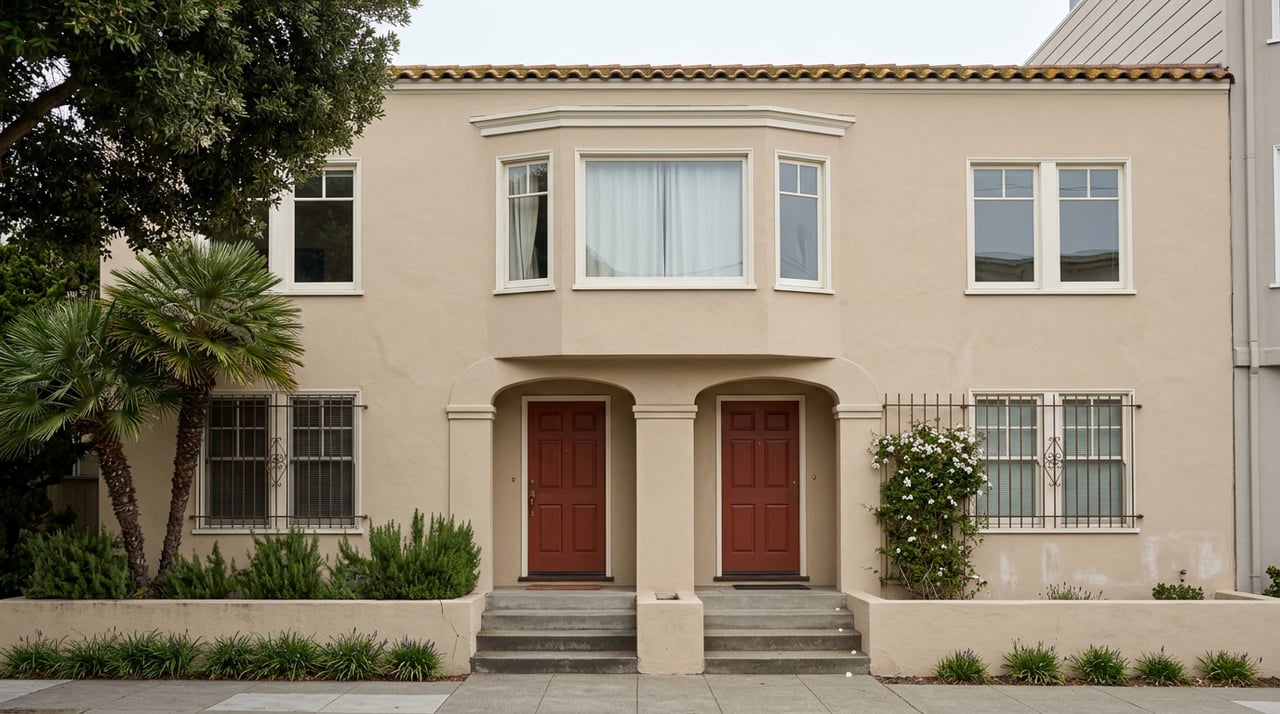
Two two-bedrooms go up for sale within a few blocks of each other in the Marina. Same era of building, same square footage, same walk to Chestnut Street. One lists for $1.4 million. The other lists for $1.15 million. A buyer who has spent a few weekends touring open houses assumes the cheaper one is simply underpriced, maybe a motivated seller, maybe a listing agent who miscalculated. Then the disclosure packet arrives and the answer shows up on page one: the cheaper unit isn't a condo. It's a tenancy in common.
That gap isn't a pricing mistake. It's the market doing exactly what it's supposed to do, pricing two legally different products that happen to look identical from the sidewalk.
A condominium gives you a recorded deed to your specific unit, plus a share of the building's common areas through a homeowners association. A tenancy in common gives you a percentage of the entire building, with an agreement among the co-owners that spells out which unit you get to use. From the street, from the floor plan, even from the finishes, they can be indistinguishable. The Marina has a deep supply of both, which is part of why this confusion is so common here. Multi-unit buildings from the 1920s and 1930s line the neighborhood's residential blocks, many of them converted to co-ownership decades ago when condo mapping was harder to come by.
The Marina is also one of the small number of San Francisco neighborhoods where TIC sales concentrate in real volume, alongside Noe Valley, the Mission, and Nob Hill, precisely because condo prices there run high enough that a TIC becomes the more attainable way into the neighborhood. Citywide, roughly 120 TICs changed hands between January and May of 2026 at a median price near $1.2 million. A meaningful share of those sales, according to the mid-2026 tracking, closed in buildings with three or more units, the exact profile most common on Marina side streets.
The price difference you see on the listing sheet isn't goodwill from the seller. It's the market pricing in a financing problem.
Condos qualify for conventional mortgages from any licensed lender, with the full menu of 30-year fixed products and competitive rate shopping that comes with a standardized asset class. TIC buyers work with a much smaller pool of lenders willing to write what's called a fractional loan, a mortgage secured only by that buyer's percentage interest rather than the whole building. Fewer lenders means less competition on terms. Buyers typically need a larger down payment, often in the 25 to 35 percent range rather than the 5 to 20 percent a qualified condo buyer might put down, and the interest rate itself tends to run half a point to a full point above what the same buyer would pay on a comparable condo.
That financing friction is the mechanism behind the 10 to 20 percent price discount TICs typically carry against similar condos in 2026. It isn't a market inefficiency waiting for a savvy buyer to exploit. It's the cost of a smaller lender pool and a riskier collateral structure, priced correctly.
| Condominium | Tenancy in Common | |
|---|---|---|
| Title | Deed to your specific unit | Percentage ownership of the whole building |
| Financing | Any conventional lender, standard rates | Small pool of fractional lenders, higher down payment, higher rate |
| Governance | HOA under California's Davis-Stirling Act | Private TIC agreement, terms vary by building |
| Resale pool | Broad, familiar to all buyers and lenders | Narrower, limited to buyers who accept fractional financing |
For a long stretch of San Francisco history, buying a TIC was a calculated bet. You accepted the financing headache today in exchange for a shot at winning the city's condo conversion lottery down the road, at which point your unit's value would reset upward to condo pricing. That bet has mostly stopped paying off.
San Francisco tightened its condo conversion rules in 2013, and any TIC formed after that date faces an indefinite wait rather than a scheduled lottery. The city's Expedited Conversion Program, which had processed the backlog of older TICs, went on hiatus in 2020 with a return date that has been pushed from 2024 to 2025 to 2026 without materializing. For a building with three, four, or six units, the honest answer in 2026 is that conversion is not a near-term possibility. Real estate professionals increasingly describe these as permanent TICs, a structural category rather than a waypoint.
That reframes the discount entirely. A decade ago, a buyer could treat a below-market TIC price as compensation for a temporary wait. Today, in a building with no realistic conversion path, that same discount is simply the permanent price of the ownership structure. It doesn't close later. It's what the unit is worth.
There is a narrow exception, and it matters most in a neighborhood like the Marina where two-unit buildings are common on the smaller side streets. Buildings with exactly two units can bypass the frozen lottery entirely, provided the building has a clean eviction history and both units have been owner-occupied for a full year by separate, unmarried individuals who each hold at least 25 percent ownership. One San Francisco real estate attorney has described the requirement as buildings needing a clean eviction history with both units owner-occupied for that full year to qualify.
If you're looking at a two-unit TIC in the Marina, that eligibility question is worth asking before you ask about finishes. A qualifying two-unit building carries real conversion upside that a six-unit building simply does not have.
There's a second reason the sticker-price comparison misleads buyers, and it has nothing to do with financing. As of August 2026, Marina condo sales are tracked across only about six actively selling buildings, with roughly 13 recorded sales over the trailing twelve months, putting the median around $1,386 per square foot. That's an extremely thin sample for a neighborhood this desirable. A single high-end sale or a single distressed one can swing that median meaningfully.
When a buyer stacks a TIC listing against "the Marina condo median," they're often comparing it to a number built from a dozen sales, not a stable benchmark. The right comparison isn't TIC price against condo median. It's TIC price against the specific handful of condo sales in comparable buildings, adjusted for the financing gap described above. Skip that step and you'll either overpay for a TIC or walk away from one that was fairly priced all along.
The Marina's building stock carries one more piece of history worth knowing before you buy into an older multi-unit property. The neighborhood took some of the most visible seismic damage in the city during the 1989 Loma Prieta earthquake, concentrated in wood-frame buildings with weak or open ground floors, exactly the kind of soft-story construction common in Marina flats built before 1978. San Francisco's mandatory retrofit program, adopted in 2013, required owners of those buildings to strengthen them on a tiered deadline schedule, and every one of those deadlines has now passed. A building that was screened into the program should have a completed retrofit and a certificate of final completion on file with the city's Department of Building Inspection.
That paperwork belongs in your due diligence file for any pre-1978 TIC or condo purchase in the Marina, alongside the TIC agreement, the eviction history, and the lender's fractional loan terms.
Does a TIC always cost less than a condo in the same building? Usually, yes, but the size of that discount depends on the building's conversion prospects. A two-unit building eligible for the bypass path will typically price closer to condo values than a six-unit building with no conversion route.
Can I get a standard 30-year fixed mortgage on a Marina TIC? Not through most conventional lenders. You'll work with one of a small number of institutions that write fractional loans, and you should get pre-approved with one of them before you write an offer, not after.
What happened to San Francisco's condo conversion lottery? It was suspended for most buildings starting in 2013, and the program meant to clear the backlog has been on hiatus since 2020 with no confirmed return date as of 2026. The two-unit bypass is the one path that still functions on a predictable timeline.
Buying into the Marina, whether it's a condo, a TIC, or something in between, comes down to reading the paperwork as carefully as the floor plan. If you're weighing a listing here and want a second read on what the ownership structure actually means for your financing and your resale pool, Mandy Lee can walk through the comparison with you. Request a free home valuation to start the conversation.
Stay up to date on the latest real estate trends.

Innovative real estate maven hailing from the heart of San Francisco. Born and raised in this iconic city, I use my deep local roots with modern strategies, reshaping the real estate landscape. With an intimate knowledge of the city's diverse neighborhoods and a knack for design, she's your guide to finding the perfect property match.