How Architecture Era Shapes Richmond District Home Prices
September 3, 2026
September 3, 2026
Pull three market snapshots from three different points in 2026 and you get three different answers to what should be a simple question. In February, one dataset had Outer Richmond's median sale price running $400,000 ahead of Inner Richmond, at roughly $2.2 million against $1.8 million. By March, the order had reversed: Inner Richmond at $2,007,000, Outer Richmond trailing at $1,950,000. By May, the gap had closed to nothing at all, both sides sitting at $2.0 million over the trailing three months.
If you've been comparing these two halves of the district by reading whichever portal loaded first, you've been tracking a number that doesn't hold still long enough to mean anything. That's not a data quality problem. It's a sign you're measuring the wrong thing.
Inner versus Outer is the natural way to slice the Richmond District. It matches how people talk about the neighborhood: Inner closer to the park and Clement Street, Outer closer to the fog and the beach. But the district was never built as two uniform halves with one price gap between them. It was built in five distinct waves, and those five product types sit block to block, on the same streets, regardless of which side of Park Presidio you're standing on.
That's the actual mechanism behind the flipping medians. A month with a few more Sea Cliff or Lake Street closings pulls the Outer Richmond number up. A month with more Edwardian sales near Clement pulls Inner Richmond up. Neither shift reflects a real change in which half of the neighborhood is more desirable. It reflects which architectural product happened to trade that month, in a market where each side of the district only sees three to four dozen closings in a given month.
The Richmond's housing stock breaks into five recognizable categories, and each one prices on its own logic:
| Era | Years | What sets the price |
|---|---|---|
| Edwardian single-family | 1900 to 1915 | Original detail (picture rails, leaded glass, wainscoting), system condition, walkability to Clement or Geary |
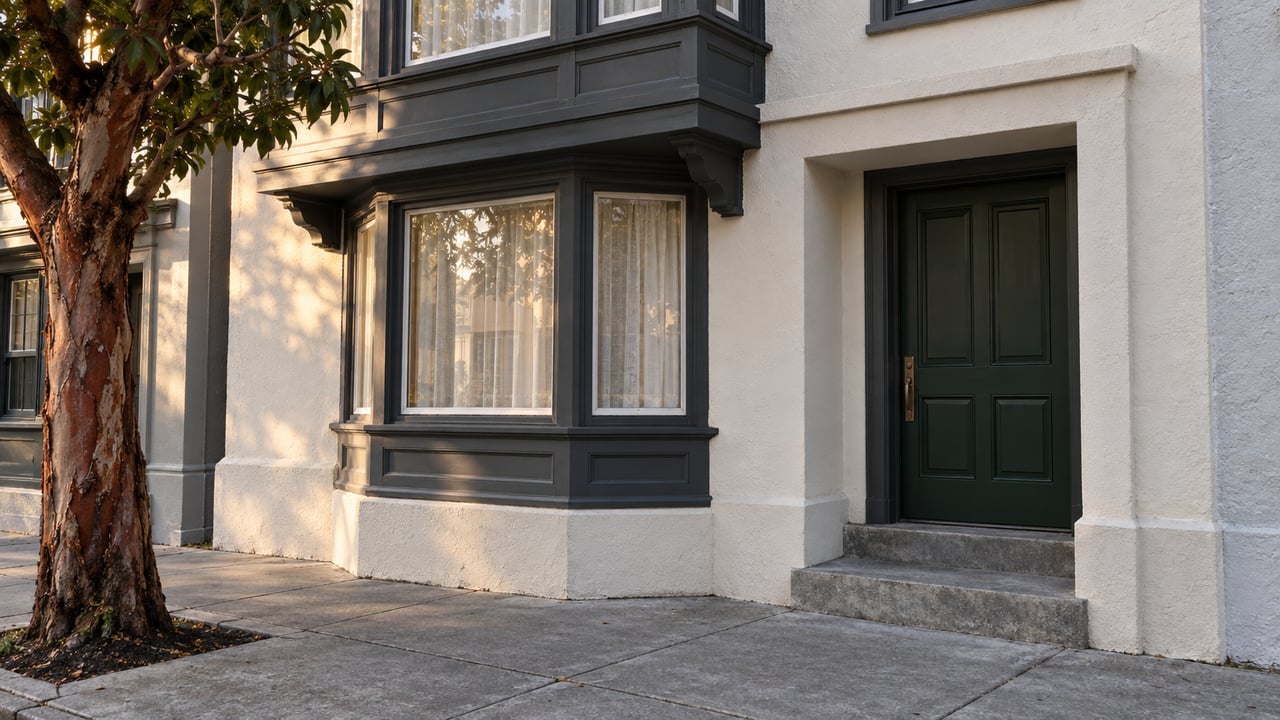
| Bay-window classic | 1910s to 1920s | The canonical SF facade, ground-floor garage, upstairs layout, any renovation |
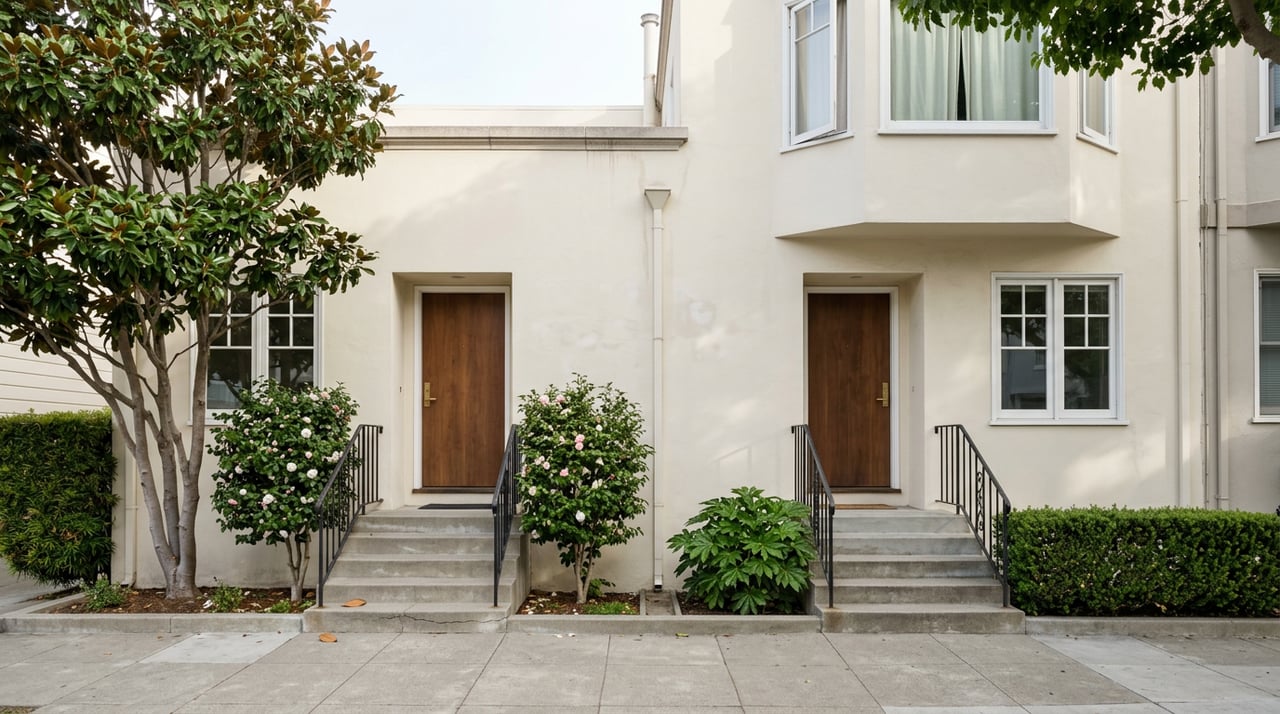
| Marina-style flat | 1920s to 1930s | Unit configuration, common areas, and whether the building is a TIC or a recorded condo |
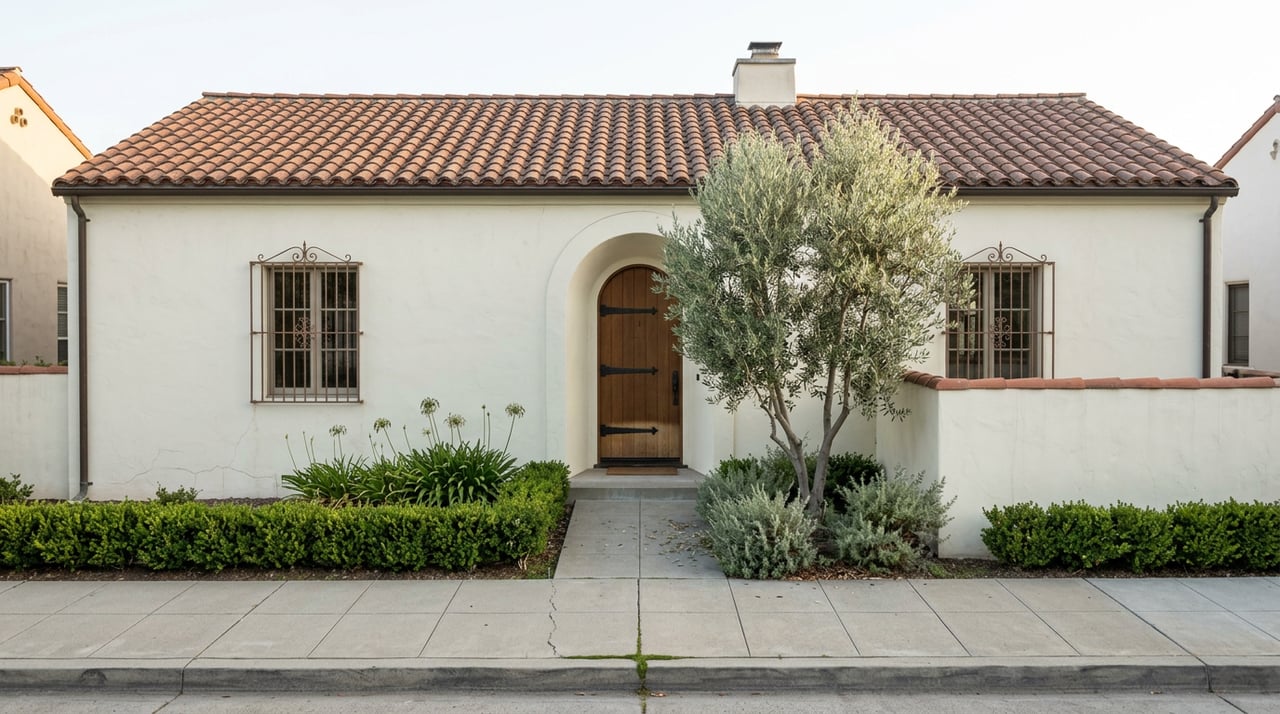
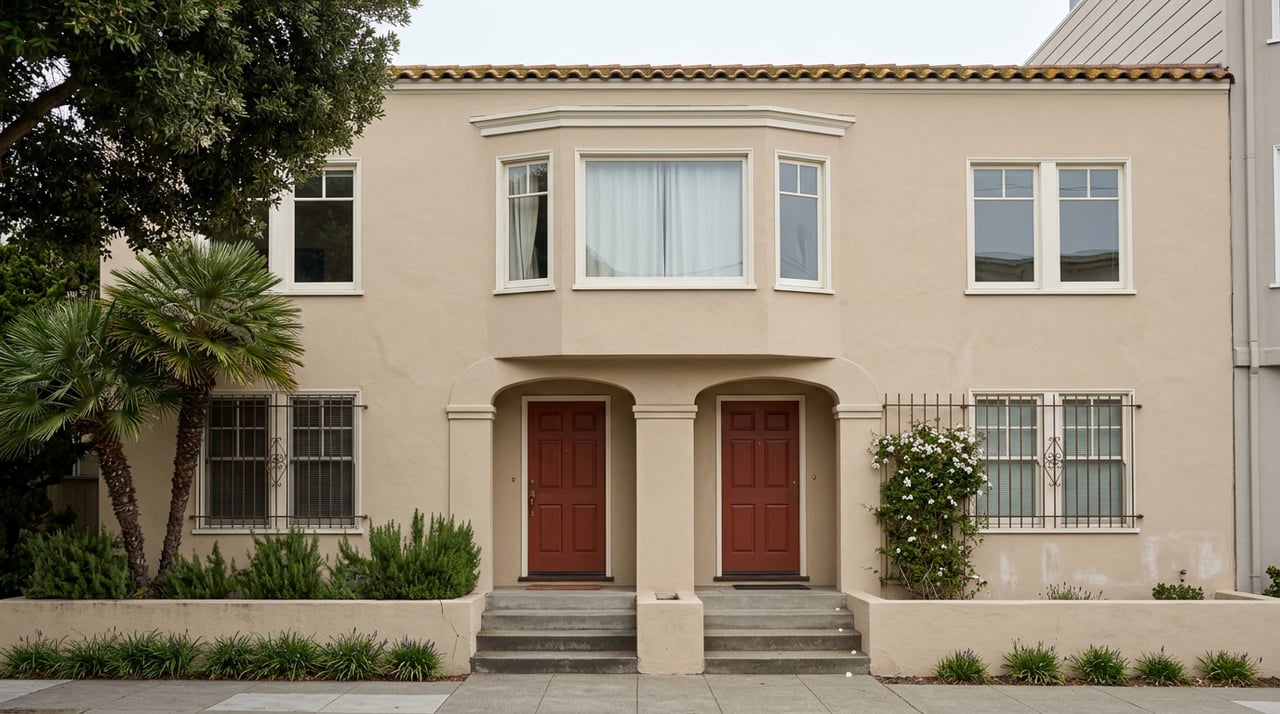
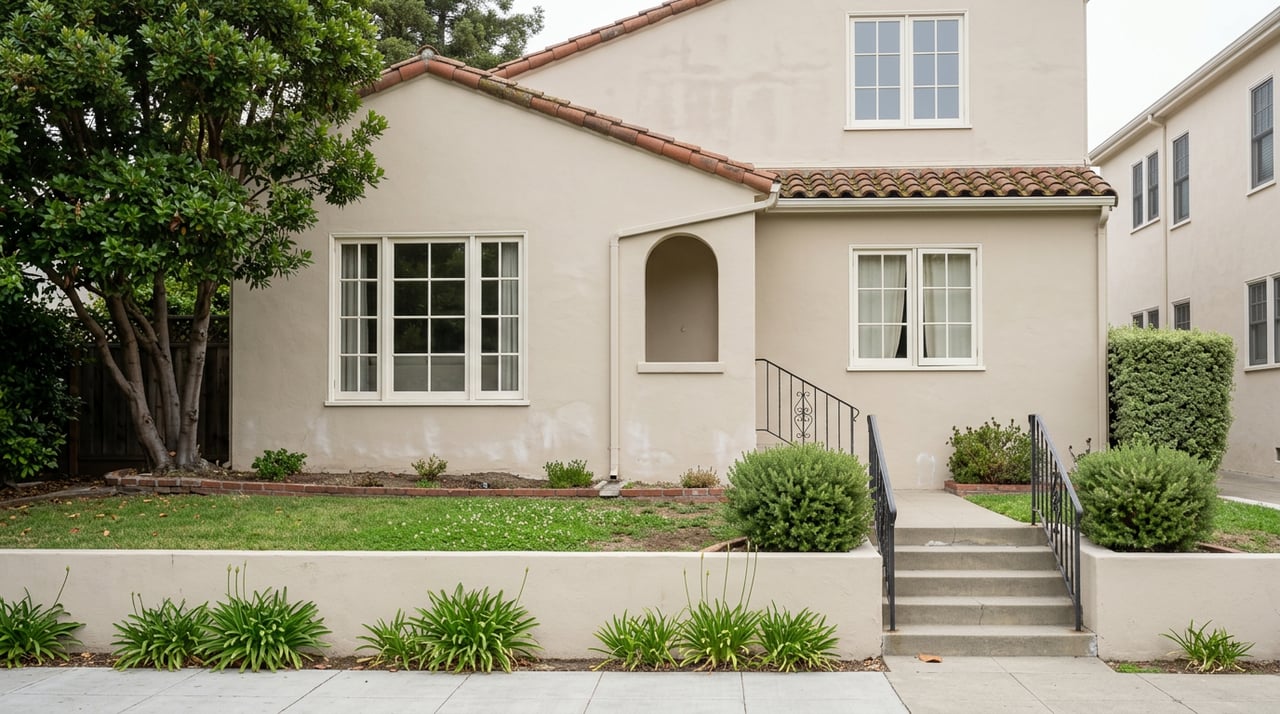
| Mediterranean and Spanish-influenced | 1930s to 1940s | Architectural integrity such as tile roofs, arched entries, and courtyards |
| Lake Street, Sea Cliff, Presidio Terrace estates | Varies | Lot, view position, and a comp set thin enough that one recent sale can reset the band |
Edwardians cluster east of Park Presidio. Marina-style flats concentrate along Lake Street, California Street, and the cross streets, and a meaningful share of them were converted into tenancy-in-common ownership rather than recorded condos, which changes the financing math for anyone shopping that price point. Mediterranean singles show up scattered through Central and Outer Richmond. The estate tier sits at the top of Lake Street and inside Sea Cliff and Presidio Terrace, where sales regularly clear $8 million and run past $15 million.
Put two of these next to each other on the same block and they are not the same product, even if the lot dimensions match and the listing photos make them look interchangeable. That's the opposite of how the Sunset works, where blocks of nearly identical Doelger-built homes let a buyer sight the comp set from two doors down. The Richmond doesn't offer that shortcut.
Small sample sizes make this worse. In May 2026 alone, Inner Richmond recorded 41 closed sales and Outer Richmond recorded 36. That's not enough volume to smooth out a few high-end outliers. One Sea Cliff closing at $12 million, or one Presidio Terrace estate trading privately before it ever needed an open house, can move a monthly median by tens of thousands of dollars in either direction without a single ordinary Richmond buyer feeling any different about the market.
Central Richmond gives a cleaner read precisely because it has less estate-tier noise diluting the number. Over the trailing six months through June 2026, the single-family median there came in at $2.62 million, with houses selling in a median of 12 days across 102 sales, up roughly 8 percent from a year earlier. Condos ran about $1.76 million and two-unit buildings about $1.95 million over the same window. That's a market moving on renovated versus original condition, not on which side of a boundary line a listing happens to fall.
The broader district backs this up. Looking at the full year of closings through mid-July 2026, Richmond houses sold over list 88 percent of the time, at a median of $522,500 over asking, against a roughly $2.49 million median sale. That's not a market where sellers need to chase price. It's a market where the printed number was never meant to be the ceiling, on either side of the district.
If you're comparing two Richmond properties, drop the inner-versus-outer framing and ask three questions instead.
The commercial corridors still matter for lifestyle and, in turn, for the Edwardian and bay-window premium. Clement Street, Geary Boulevard, Balboa Street, and California Street carry the bulk of the district's daily life, and walkability to those corridors is one of the few factors that reliably moves price within a given era rather than across eras. But that's a walkability premium layered on top of an architectural baseline, not a substitute for knowing what baseline you're standing on.
Is Inner Richmond actually more expensive than Outer Richmond? Depending on the month you check, either side can show the higher median, and by May 2026 the two were statistically tied at $2.0 million each over the trailing three months. The more useful comparison is product type against product type, not side against side.
What's a Marina-style flat, and why does TIC status matter? These are the two and three-unit buildings built in the 1920s and 1930s, concentrated along Lake Street and California Street. Many were subdivided as tenancy-in-common ownership rather than recorded condos, which affects financing terms and resale liquidity differently than a standard condo purchase would.
How fast are Richmond homes actually selling right now? Central Richmond single-family homes closed in a median of 12 days as of June 2026. District-wide, 88 percent of Richmond houses sold over list through mid-July 2026, at a median of $522,500 over asking.
If you're trying to figure out what a specific block in the Richmond is actually worth, the era of the house in front of you tells you more than the side of the district it sits on. That's the kind of read that takes local pattern recognition, not a portal median.
Mandy Lee works these blocks house by house, era by era, and can walk you through what a specific Richmond property is actually worth before you make an offer. Request a free home valuation to start that conversation.
Stay up to date on the latest real estate trends.
Innovative real estate maven hailing from the heart of San Francisco. Born and raised in this iconic city, I use my deep local roots with modern strategies, reshaping the real estate landscape. With an intimate knowledge of the city's diverse neighborhoods and a knack for design, she's your guide to finding the perfect property match.