Ingleside Terraces vs West Portal: Which Suits You?
May 7, 2026
May 7, 2026
Wondering whether Ingleside Terraces could give you what you like about West Portal, without feeling exactly the same? That is a smart question, especially if you are trying to balance atmosphere, architecture, daily convenience, and the kind of street experience you want long term. If you are comparing these San Francisco neighborhoods, this guide will help you understand how Ingleside Terraces stacks up against West Portal, and where the Sunset fits into the picture. Let’s dive in.
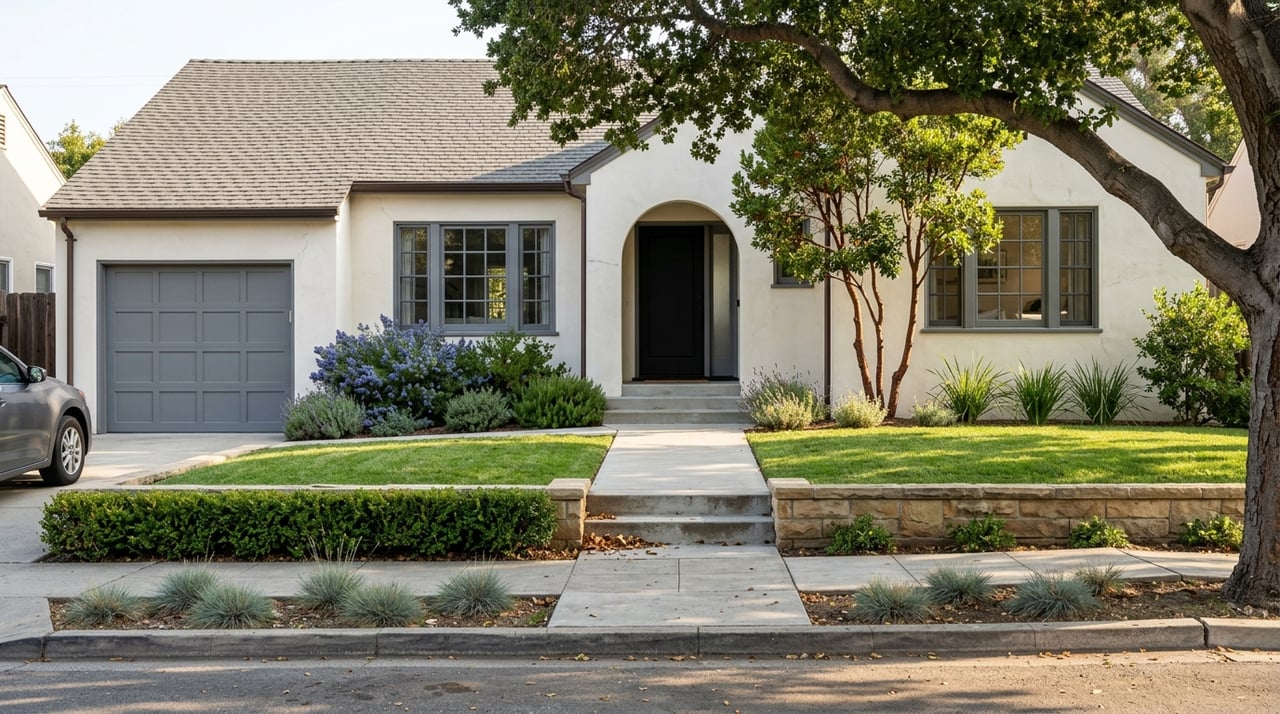
Ingleside Terraces stands apart because it was planned as a residence park, not as a typical city grid neighborhood. San Francisco Planning describes residence parks as early 20th-century garden suburbs designed to feel more country-like, with larger lots, landscaping, curving streets, and ornamental features.
That planning approach still shapes how Ingleside Terraces feels today. The neighborhood began in 1912 on the former Ingleside Race Track site, and its curving street plan gives it a more enclosed, intentional identity than many other parts of San Francisco.
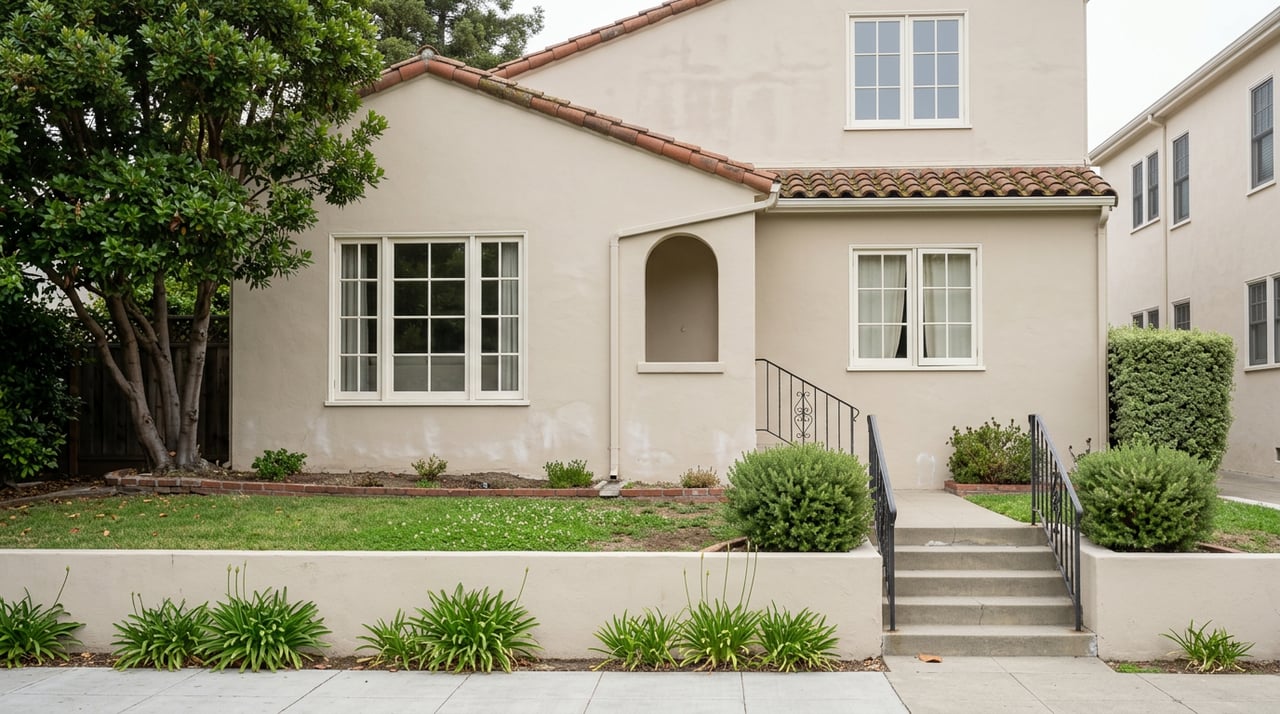
The housing stock also reinforces that character. According to the local historic context statement, Ingleside Terraces includes large Craftsman houses along with Period Revival, Spanish Colonial, and Mediterranean homes.
One of the clearest differences is the neighborhood layout. Ingleside Terraces was built with a curvilinear street pattern rather than a conventional grid, which helps it read as a planned residential enclave.
The Entrada Court sundial and garden park were even used as part of the original marketing for the development. That detail matters because it helps explain why the neighborhood still feels visually unified and distinct more than a century later.
Lot size is another part of the story. The original lot pattern ranged from about 50 by 100 feet to 67 by 150 feet, which supports the sense of space many buyers notice right away.
The neighborhood is also notably residential in use. The historic context statement says the tract has no multi-family, commercial, or institutional buildings, which creates a very different day-to-day rhythm from nearby commercial-centered areas.
If Ingleside Terraces is defined by its residential setting, West Portal is defined by its village center. West Portal Avenue includes a neighborhood commercial district that stretches for three blocks along West Portal Avenue and one block east on Ulloa.
That district is intended to serve surrounding neighborhoods and preserve a village character. Planning rules there limit new development to 26 feet and two stories, preserve rear yards, and discourage lot mergers, all of which help maintain the scale many buyers associate with West Portal.
West Portal also functions as a transit and activity hub. SFMTA describes West Portal Station as a busy station served by the K, L, and M light-rail lines plus two bus routes.
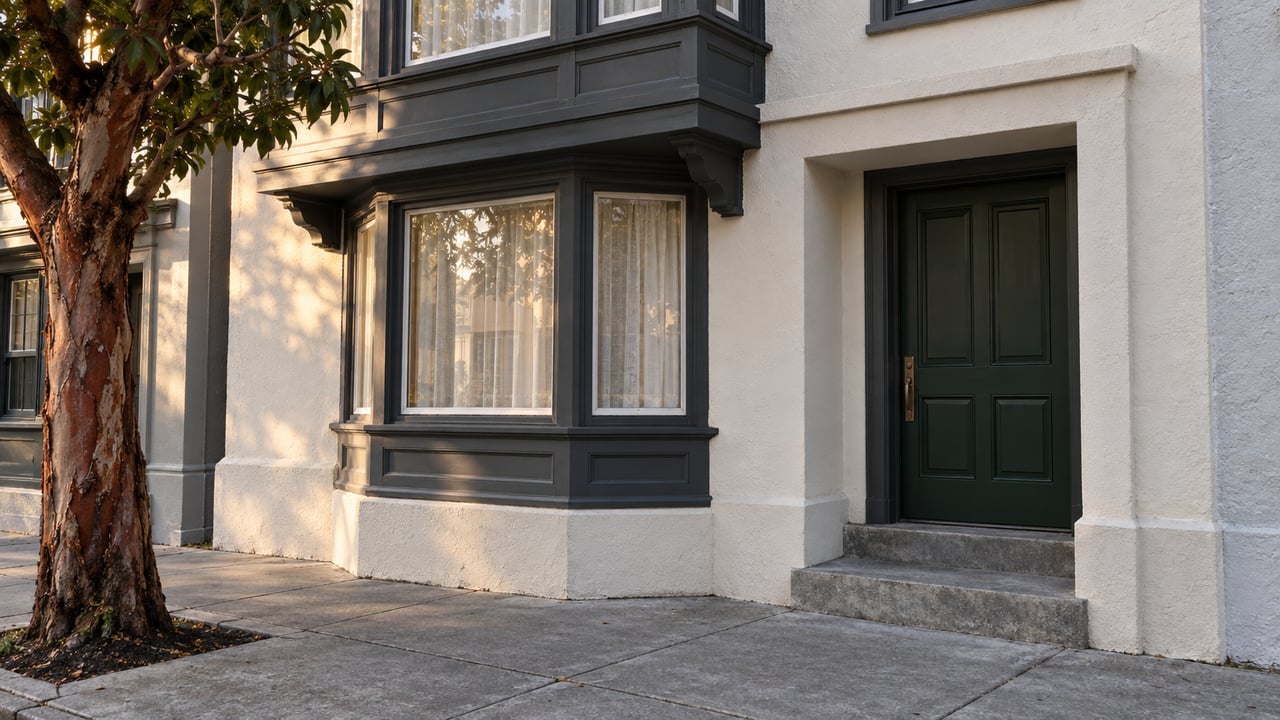
Architecturally, West Portal is less uniform than Ingleside Terraces. Homes in the area reflect a wider mix of styles, including early Arts and Crafts and Spanish influences, plus later Colonial, Tudor, Spanish, Italianate, and Marina-style homes.
If you are deciding between the two, the real choice is less about which one is better and more about how you want to live. These neighborhoods organize daily life in very different ways.
Ingleside Terraces may be the better fit if you want a planned, landscaped neighborhood with larger lots, curving streets, and a strong architectural identity. It tends to appeal to buyers who value a destination feel and who do not need retail right outside the door.
Because the neighborhood has no commercial or multi-family buildings within the tract, the experience is more consistently residential. For some buyers, that creates a sense of separation and calm that is hard to replicate elsewhere.
West Portal may be the stronger choice if your priority is everyday walkability, easy access to neighborhood-serving shops, and close proximity to transit. Its commercial core gives you a more active, errands-friendly rhythm.
That difference can matter a lot in daily life. If grabbing coffee, using transit, or staying close to a compact neighborhood center is high on your list, West Portal offers a setup Ingleside Terraces does not try to replicate.
A helpful shorthand is this: Ingleside Terraces feels like a destination neighborhood, while West Portal feels like a village neighborhood. That framing comes directly from how each area was built and how its street life works today.
The Sunset often comes up in the same search because it offers another version of west-side living, but it has a different structure from both Ingleside Terraces and West Portal. San Francisco Planning describes the Sunset as being known for rows of similarly massed single-family houses.
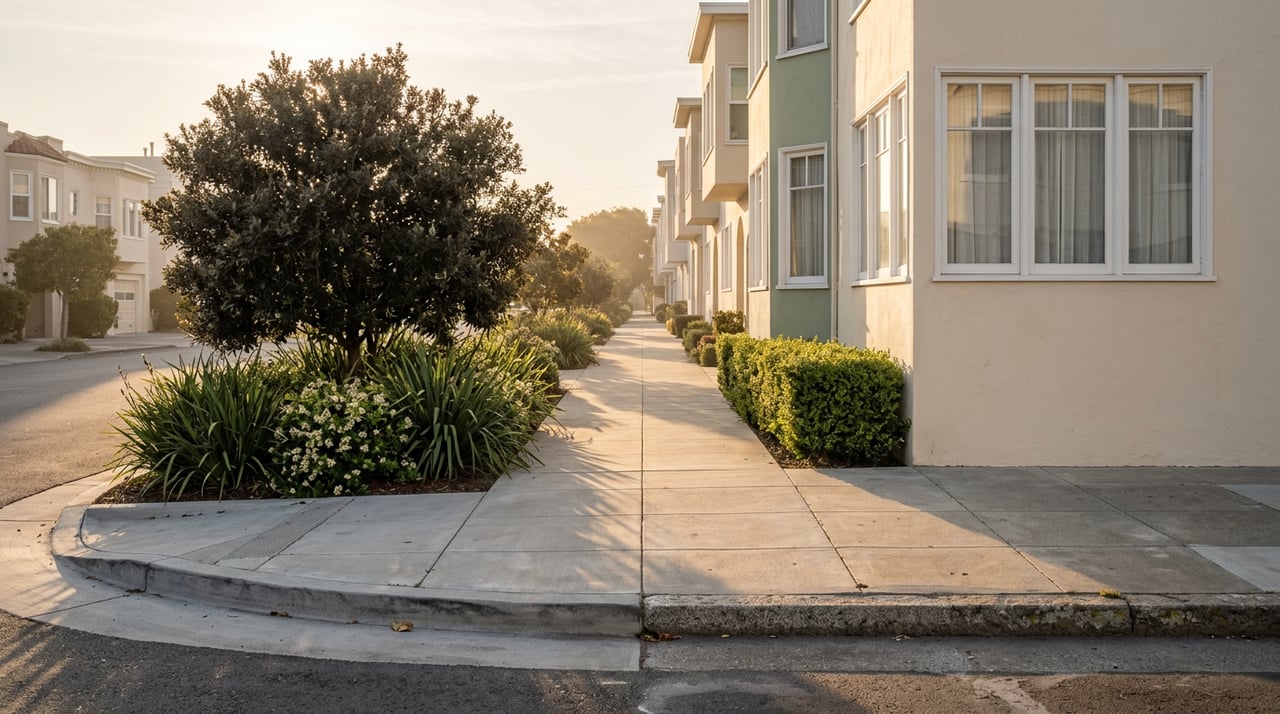
The same context statement notes that the vast majority of tract houses use the tunnel-entry layout. Because many run full width to the lot line, the streetscape can read more like a continuous wall of homes than the more varied spacing you find in Ingleside Terraces.
That does not mean the Sunset lacks architectural variation. The area includes styles such as Storybook, Period Revival, Colonial Revival, Minimal Traditional, French Provincial, and Streamline Moderne.
The commercial pattern is different too. Instead of one central village core, the Sunset’s shopping and dining activity is spread across multiple neighborhood commercial districts, including Irving, Noriega, Taraval, and Judah.
For many buyers, this comparison comes down to pattern and atmosphere. Ingleside Terraces feels more planned, landscaped, and distinct as a residential enclave, while the Sunset often feels more corridor-based with commercial life spread across several streets.
The Sunset may appeal if you want a neighborhood made up of tract-house blocks and multiple shopping corridors rather than one concentrated center. Ingleside Terraces may appeal more if you want a stronger sense of design identity and a streetscape defined by larger lots and curving roads.
A useful shorthand here is that the Sunset often reads as a corridor neighborhood. Ingleside Terraces, by contrast, is more cohesive in how its streets, lot pattern, and ornamental planning features work together.
Yes, if what you like about West Portal is west-side residential living, attractive homes, and established neighborhood character, but you want a more enclosed and design-forward residential setting. Ingleside Terraces offers a very specific version of that experience.
It may be the right alternative if you are willing to trade immediate retail access for a neighborhood with larger lots, curving streets, and a more unified architectural identity. Buyers who respond strongly to planning, layout, and visual character often notice that difference right away.
If your top priority is a walkable commercial district and direct transit access, West Portal may still be the better match. If your goal is a neighborhood that feels intentionally composed and primarily residential, Ingleside Terraces deserves a close look.
When you tour these areas, pay attention to the details that shape your day-to-day life. The biggest differences are often less about price or style labels and more about what the streets ask of you and give back.
Here are a few practical things to notice:
For many buyers, the right answer becomes clear once they experience these neighborhoods block by block.
If you want help comparing Ingleside Terraces, West Portal, or the Sunset with a truly local lens, Mandy Lee offers thoughtful, neighborhood-specific guidance tailored to how you want to live.
Stay up to date on the latest real estate trends.
Innovative real estate maven hailing from the heart of San Francisco. Born and raised in this iconic city, I use my deep local roots with modern strategies, reshaping the real estate landscape. With an intimate knowledge of the city's diverse neighborhoods and a knack for design, she's your guide to finding the perfect property match.