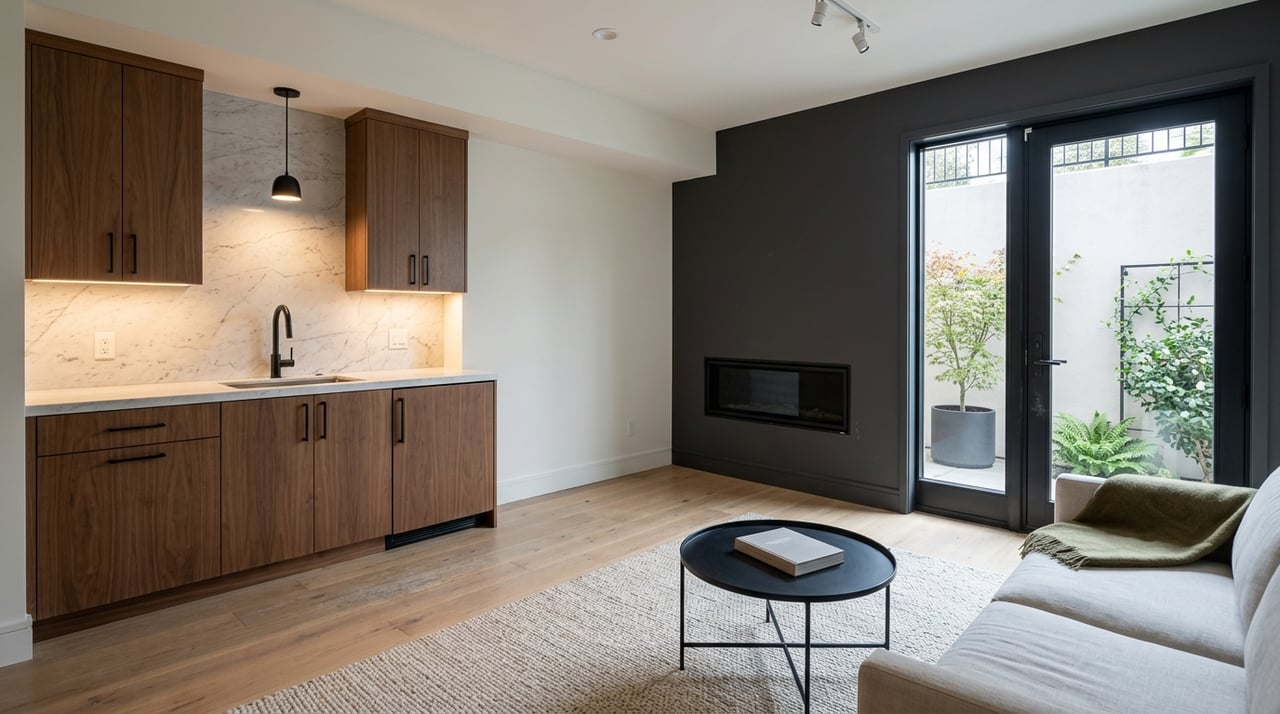
West Portal ADU & Value-Add Potential in Single-Family Homes
April 23, 2026
April 23, 2026
Thinking about buying or selling a West Portal home with upside? You are not alone. In this part of San Francisco, value-add potential often comes down to what is possible on a specific parcel, not just what looks promising at first glance. If you are weighing an ADU, a lower-level conversion, or a smart interior reconfiguration, this guide will help you understand the real opportunities, the limits, and the due diligence that matters most. Let’s dive in.
West Portal is not a one-size-fits-all renovation market. According to San Francisco Planning’s zoning resources, owners should verify zoning by address using the Property Information Map before making assumptions about what can be built.
That parcel-by-parcel reality matters because two homes on the same block may have very different paths. The city’s broader housing policy supports added capacity in western and northern San Francisco, including ADUs, but that policy backdrop does not replace address-specific review.
In West Portal, value-add often starts with making better use of existing space. That may mean repurposing a garage or storage area, improving a lower level, or reworking underused rooms to better match how you live.
For many homeowners, the first step is not a major expansion. It is a closer look at the home’s current layout, legal history, and what kind of project can move through permits more efficiently.
One of the most common paths is converting existing lower-level space. The California Department of Housing and Community Development says ADUs can be created from repurposed existing space, including areas like garages, and San Francisco Planning notes that most single-family ADUs are built in existing storage or garage spaces.
That is one reason lower levels attract so much attention in West Portal homes. If the space is already there, you may be able to add function without changing the overall building envelope as dramatically as a full addition would.
Some value-add projects do not involve adding a new unit at all. Instead, homeowners reconfigure existing rooms, improve flow, or update kitchens and baths to make the house work better and present better in the market.
San Francisco’s over-the-counter permit process for simple interior residential remodels is designed for certain straightforward projects, while larger or more complex work moves to in-house review. In practical terms, that makes “use what you already have first” a common strategy.
Some homes may support a larger move. San Francisco Planning’s single-family ADU fact sheet says a single-family home may add one ADU anywhere within the buildable area of the lot, including by expanding the existing building or adding a new structure.
That said, expansion is not always the simplest path. If the ADU is created by expanding an existing building, neighborhood notice and design review are required, so timing and process can change quickly.
If you own or are considering a single-family home in West Portal, there may be ADU potential under current San Francisco rules. San Francisco Planning states that a single-family home in a zoning district that permits residential uses is eligible to add one ADU.
That is the headline, but the details matter. The type of ADU, the permit track, and the property’s physical and regulatory constraints will shape what is realistic.
The state describes ADUs as detached, attached, or created from repurposed existing space. That gives homeowners several possible directions depending on the lot, the house, and the budget.
For smaller conversions, California also recognizes JADUs. According to HCD’s ADU resources, a JADU is created within the walls of a proposed or existing single-family residence and can be up to 500 square feet.
A JADU can be useful if you want to legalize or monetize a smaller part of the house without pursuing a full detached structure. In some cases, that can align better with the existing home and scope of work.
There are cases where a property may support more than one ADU, but this is not the standard assumption. San Francisco Planning’s fact sheet says homes eligible for the voluntary seismic retrofit program may be able to add more than one ADU, and the city’s ADU programs comparison chart says lots undergoing mandatory or voluntary seismic retrofit have no limit on the number of ADUs.
This is a good example of why broad online advice can be misleading. A property’s retrofit status, zoning, and existing conditions all affect the answer.
One of the biggest planning questions is whether the project fits the State or Local ADU program. The process is not just paperwork. It can affect timing, notice requirements, and the overall path to approval.
According to San Francisco Planning’s comparison chart, State-program ADUs are ministerial, use a 60-day review timeframe from a complete application, and are not subject to CEQA or Planning Code Section 311 neighborhood notification.
By contrast, the Local ADU process includes additional notice requirements. The same chart says the local program requires a notice posted at least 15 days before application and also involves legal notices such as NSR and Costa-Hawkins steps.
If you are buying a home for future upside, the permit path can affect both cost and timeline. If you are selling, being able to explain whether a property appears better suited for a simpler interior remodel, a state-program ADU, or a more complex local process can make your marketing more credible.
The city also offers a Permit Review Roundtable for eligible state-program ADUs. That review can involve DBI, Planning, Public Works, Fire, and the Public Utilities Commission, which is a helpful reminder that ADU feasibility is a multi-agency question.
Before you build your plans around a potential ADU or conversion, start with the records. San Francisco Planning recommends checking zoning by address in the Property Information Map, and SF DBI says owners and real estate professionals can request a 3R report to review authorized use and permit history.
Those two items often answer the first big questions:
This step is especially important in older San Francisco housing stock, where existing conditions and permitted history are not always the same thing.
Even if a home looks like a strong candidate on paper, site conditions can shift the outcome. San Francisco Planning’s comparison chart notes that State-program ADUs are generally not subject to subjective design review except in certain historic or conservation contexts.
SF.gov also says pre-approved detached ADU plans cannot be used in slope protection, slope and seismic hazard, landslide or liquefaction, Maher, or flood zones. That does not automatically rule out a project, but it does mean feasibility is more nuanced than a quick online search might suggest.
Some West Portal properties sit near neighborhood commercial areas or have mixed-use characteristics. In those situations, the rules may differ from a standard single-family parcel.
San Francisco Planning’s comparison chart says an ADU generally cannot eliminate or reduce ground-story retail or commercial space in a Neighborhood Commercial District. If a property has commercial frontage, it should be reviewed through a different lens from the start.
ADU conversations are often driven by future value, but it is just as important to understand current cost and timing. According to SF.gov’s ADU project guidance, an ADU typically costs at least $125,000 in materials and labor, with architects and engineers often around 10% of construction cost and city fees around 6% to 9%.
The same city guidance says the overall process may take more than 18 months from the decision to build. That timeline does not mean every project will take that long, but it does set realistic expectations.
For buyers, this affects how you underwrite opportunity. For sellers, it helps frame value-add potential responsibly, especially when marketing a home with room to improve but no guaranteed outcome until proper review is complete.
If you are shopping for a West Portal home with upside, focus on evidence, not assumptions. A home may feel like it has “easy ADU potential,” but the right question is whether records, zoning, and layout support a realistic path.
A few smart starting points include:
The more clearly you understand the path, the better you can compare homes that may look similar on the surface.
If you are selling a home with possible value-add appeal, credibility matters. Buyers respond best when the opportunity is presented clearly and accurately, not overstated.
That can mean highlighting practical features such as existing lower-level space, garage configuration, prior plans, permit history, or city-approved documentation if it exists. For the right property, strong marketing may focus on the home as both a livable residence today and a thoughtful project opportunity for tomorrow.
In a neighborhood like West Portal, that kind of positioning works best when it is hyperlocal, design-aware, and grounded in the actual rules that apply to the parcel.
The biggest takeaway is simple: value-add in West Portal is real, but it is highly specific. The best opportunities usually come from combining local market knowledge with zoning review, permit history, and practical project planning.
Whether you are buying a home with future ADU potential or preparing to sell a property with untapped upside, the goal is the same. You want a strategy that is well-presented, well-researched, and realistic about what the property can support. If you want help evaluating West Portal homes through that lens, connect with Mandy Lee for thoughtful, neighborhood-specific guidance.
Stay up to date on the latest real estate trends.
Innovative real estate maven hailing from the heart of San Francisco. Born and raised in this iconic city, I use my deep local roots with modern strategies, reshaping the real estate landscape. With an intimate knowledge of the city's diverse neighborhoods and a knack for design, she's your guide to finding the perfect property match.